
History of the Basilica Cistern in Istanbul
The Basilica Cistern is one of the most impressive surviving structures from Byzantine Constantinople. Built during the reign of Eastern Roman Emperor Justinian I, the vast underground reservoir supplied water to the imperial district and continued to serve the city through different historical periods.
Basilica Cistern History at a Glance
The cistern combines Byzantine engineering, reused Roman architectural elements, Ottoman-era history and modern conservation within one underground structure.
Built during the reign of Eastern Roman Emperor Justinian I, who ruled from 527 to 565.
Stored and distributed water to the Great Palace and other buildings in the imperial district.
The marble columns are arranged in 12 rows, with 28 columns in each row.
The structure was designed as the largest covered cistern in historic Constantinople.
Basilica Cistern Historical Timeline
The history of the Basilica Cistern extends from the Byzantine imperial period to its present role as one of Istanbul’s best-known cultural landmarks.
Construction under Justinian I
The underground reservoir was built during the reign of Emperor Justinian I to support the water needs of the imperial centre of Constantinople.
Water for the Imperial District
Water carried through aqueducts and collected from rainfall was stored and distributed to the Great Palace and surrounding buildings.
Continued Use during the Ottoman Period
After the Ottoman conquest of Constantinople, the cistern continued to supply water to Topkapi Palace for a period and was later used by residents in the surrounding area.
Documented by Petrus Gyllius
French scholar Petrus Gyllius explored and measured the underground structure, recorded its columns and described how local residents accessed water through wells.
Cleaning and Museum Conversion
A major restoration and cleaning project introduced visitor walkways and brought the Medusa head column bases to wider public attention.
Comprehensive Restoration
The Basilica Cistern reopened following an extensive conservation project that strengthened the structure and renewed the visitor experience.
Why Was the Basilica Cistern Built?
Constantinople required a reliable water supply for its palaces, public buildings and growing population. The Basilica Cistern formed part of the wider water infrastructure that transported, stored and distributed water across the city.
The reservoir supplied the Great Palace and nearby buildings in the imperial district. Water reached the cistern through historic waterways and aqueduct systems, while rainfall also contributed to the stored supply.
Why Is It Called the Basilica Cistern?
The underground reservoir is known by two widely used names, each connected to its location or appearance.
Basilica Cistern
The name refers to the earlier Stoa Basilica that once stood above or near the site where the underground reservoir was constructed.
Yerebatan Sarayı
The Turkish name means Sunken Palace. It reflects the palace-like appearance created by hundreds of marble columns rising from the water.
Architecture and Engineering of the Basilica Cistern
The size and construction of the cistern demonstrate the scale of Byzantine water engineering and the reuse of architectural materials from different periods.
Rectangular Underground Chamber
The cistern covers an area of approximately 10,000 square metres beneath the historic centre of Istanbul.
Marble Columns
The columns form 12 long rows, with 28 columns in each row supporting the vaulted brick ceiling.
Column Height
Most columns rise approximately nine metres and feature a mixture of Corinthian, plain and other capital styles.
Thick Brick Walls
The brick walls and floor were covered with a thick waterproof mortar designed to retain large quantities of water.
The Basilica Cistern during the Ottoman Period
The role of the cistern changed after the Ottoman conquest of Constantinople, but the underground structure remained part of the city’s water history.
Use after the Conquest
After 1453, the cistern continued to provide water for Topkapi Palace for a period before its role gradually changed.
Water Access from Above
As buildings developed above the cistern, local residents accessed the underground water through wells connected to the structure.
Ottoman Restorations
The cistern underwent restoration during the reigns of Sultan Ahmed III and Sultan Abdulhamid II, followed by additional conservation work in later years.
Petrus Gyllius and the Rediscovery of the Cistern
The Basilica Cistern was known to local residents, but it remained largely unfamiliar to Western scholars until the 16th century. French naturalist and topographer Petrus Gyllius explored the structure while living in Istanbul between 1544 and 1555.
Gyllius measured the underground chamber, counted its 336 columns and recorded wells that allowed people living above to draw water. His descriptions became an important written record of the cistern’s condition during the Ottoman period.
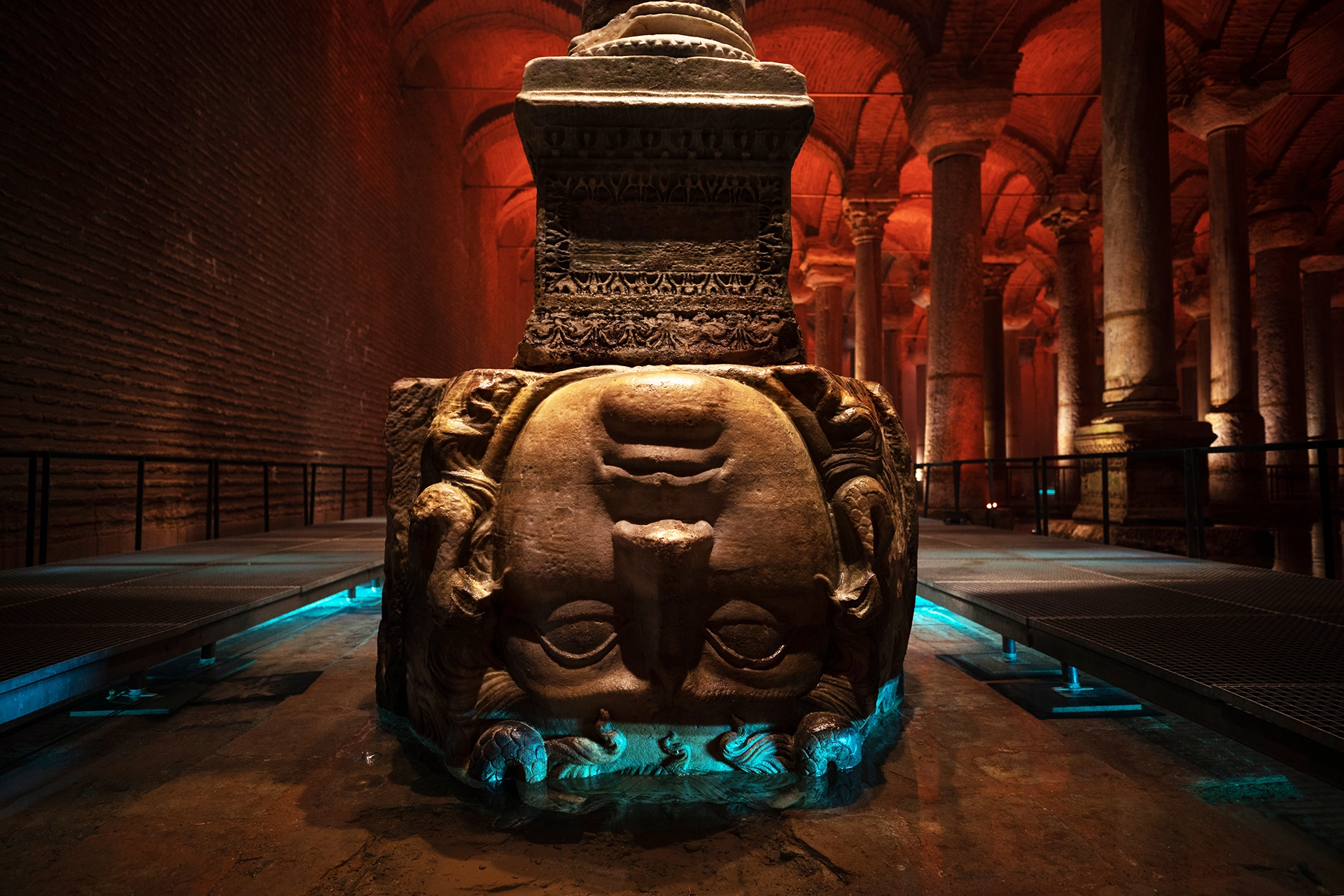
The Medusa Heads and Reused Roman Stone
Two ancient stone blocks carved with the face of Medusa support columns in the northwest part of the cistern. One is positioned sideways and the other upside down.
Their original location and exact purpose remain uncertain. They are generally understood as reused Roman architectural elements, reflecting the common historic practice of incorporating older stone into new structures.
Discover the History and Legends of the Medusa HeadsRestoration and Opening as a Museum
The Basilica Cistern has undergone several repairs and conservation projects designed to protect the structure and make it accessible to visitors.
Structural Support Work
Nine columns considered at risk were reinforced with concrete to prevent further deterioration.
Cleaning and Visitor Walkway
The cistern was cleaned, restored and opened to the public as a museum with a visitor platform through the underground chamber.
Extensive Conservation Project
A major restoration programme strengthened the historic structure, renewed visitor areas and prepared the cistern for its reopening in July 2022.
Basilica Cistern Facts and Legends
The history of the Basilica Cistern combines documented engineering and restoration records with legends inspired by its unusual underground atmosphere.
Built as a Water Reservoir
The cistern was designed to store and distribute water rather than serve as a palace, temple or underground passage.
The Columns Came from Different Sources
Variations in marble, column shape and capital design indicate that many architectural elements were reused from earlier structures.
The Medusa Heads Were Positioned to Remove Their Power
A popular story claims that the sideways and upside-down positions prevented Medusa’s gaze from turning visitors to stone, but the actual reason is unknown.
The Tear Column Remembers the Builders
One legend associates the wet, tear-like appearance of the Column of Tears with workers who died during construction, although this story is not established historical evidence.
Continue Exploring the Basilica Cistern
Learn more about the structure’s most recognizable features and prepare for your visit.
Medusa Heads
Explore the history, possible origins and legends connected to the two famous Medusa column bases.
Discover the Medusa HeadsInside the Basilica Cistern
See what to look for inside, including the ancient columns, Column of Tears and modern visitor route.
Explore the InteriorVisitor Tips
Check practical advice on visit duration, photography, audio guides and preparing your mobile ticket.
Read Visitor TipsExperience the History of the Basilica Cistern
Walk among 336 historic columns, see the Medusa heads and explore one of the most remarkable surviving structures from Byzantine Constantinople.
Frequently Asked Questions About Basilica Cistern History
When was the Basilica Cistern built?
The Basilica Cistern was built in the 6th century during the reign of Eastern Roman Emperor Justinian I, who ruled from 527 to 565.
Why was the Basilica Cistern built?
It was constructed as an underground water reservoir to store and distribute water to the Great Palace and surrounding buildings in the imperial district of Constantinople.
Why is it called the Basilica Cistern?
The name comes from the earlier Stoa Basilica that once occupied the area above or near the underground reservoir.
How many columns are inside the Basilica Cistern?
The Basilica Cistern contains 336 marble columns arranged in 12 rows, with 28 columns in each row.
Who rediscovered the Basilica Cistern?
French naturalist and topographer Petrus Gyllius explored, measured and documented the cistern while living in Istanbul between 1544 and 1555.
When did the Basilica Cistern become a museum?
Following major cleaning and restoration work between 1985 and 1987, the cistern opened to the public as a museum with a visitor walkway.
Are the stories about the Medusa heads historically proven?
No. The Medusa blocks are real reused Roman sculptures, but stories explaining why one was placed sideways and the other upside down remain legends rather than confirmed historical facts.