
The Medusa Heads inside the Basilica Cistern
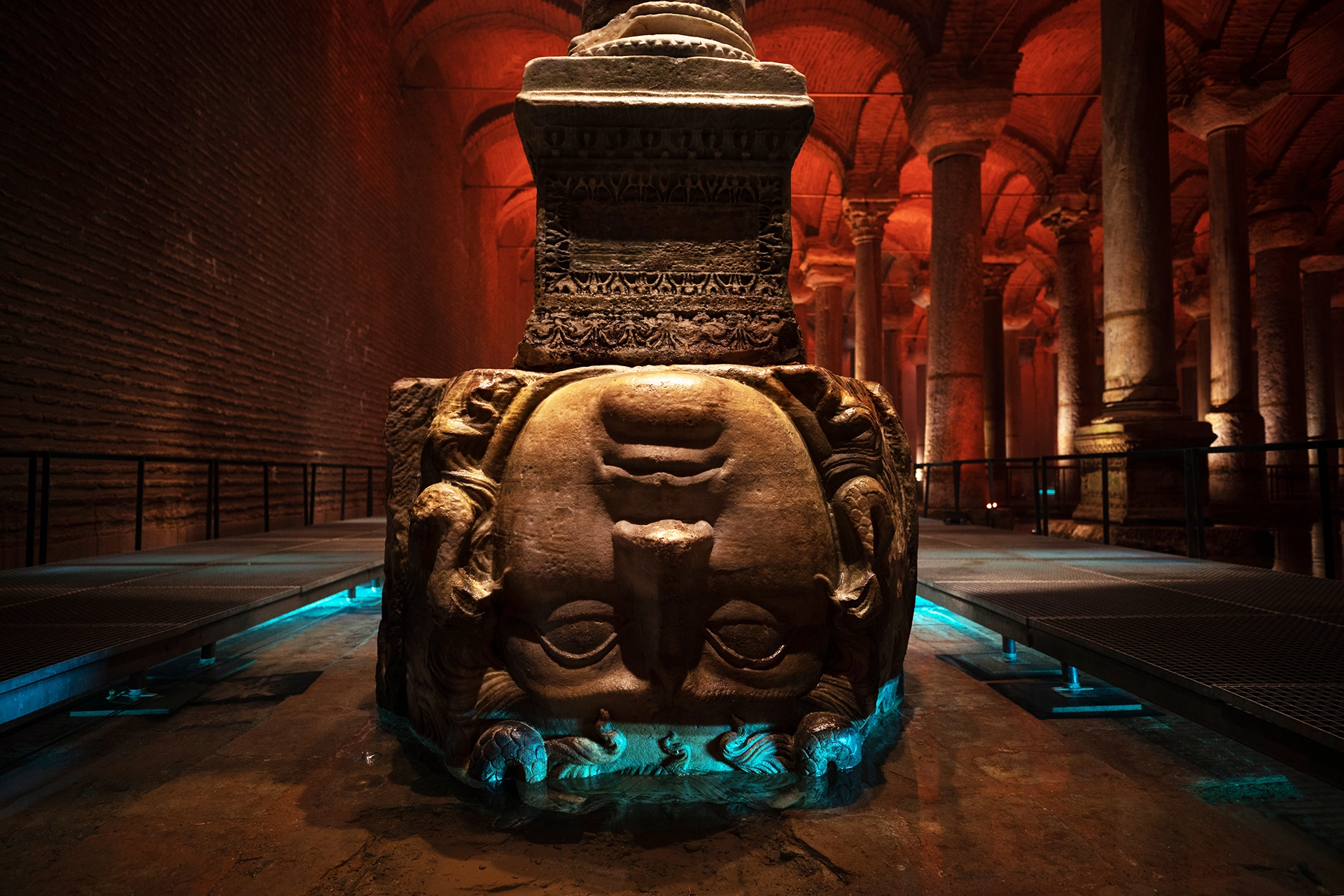
Two ancient stone blocks carved with the face of Medusa are among the most recognizable features of the Basilica Cistern. Both are used as column bases, but one is positioned horizontally and the other upside down. Their original location and the precise reason for their unusual orientation remain uncertain.
Basilica Cistern Medusa Heads at a Glance
The sculptures combine Roman stonework, Byzantine reuse and centuries of mythology within one of the most visited areas of the underground cistern.
The Basilica Cistern contains two separate Medusa head blocks beneath marble columns.
The sculptures are located in the deeper part of the visitor route and are displayed beneath columns.
One block is placed horizontally, while the second is turned completely upside down.
Both carved blocks were incorporated into the structure to support marble columns.
What Are the Basilica Cistern Medusa Heads?
The two Medusa heads are carved stone blocks generally regarded as examples of Roman sculpture. They were reused during the construction of the Basilica Cistern and placed beneath columns as supporting bases.
Reusing stone from earlier buildings was common in late antiquity and the Byzantine period. Columns, capitals and carved blocks from different structures could be incorporated into new construction when their dimensions and strength made them useful.
The Sideways and Upside-Down Medusa Heads
The two sculptures are not positioned in the same direction, which has inspired both practical explanations and mythological interpretations.
The Sideways Medusa Head
This sculpture is positioned horizontally beneath a column. The side of Medusa’s face remains visible while the block functions as structural support.
- Orientation
- Horizontal
- Structural Use
- Column base
The Upside-Down Medusa Head
The second sculpture is placed with the face completely inverted. It also supports a column and is displayed close to the other Medusa block.
- Orientation
- Upside down
- Structural Use
- Column base
Why Are the Medusa Heads Sideways and Upside Down?
No surviving inscription or construction record gives a definitive explanation. Several interpretations are commonly discussed, but they should not all be treated as established historical fact.
The Blocks Were Adjusted to Fit the Columns
The most practical explanation is that the stones were rotated to provide the correct height and a stable base for the columns they support.
Medusa Images May Have Had a Protective Meaning
Images of Medusa and other Gorgons were sometimes used in the ancient world as protective symbols intended to repel danger or evil.
Turning Medusa Removed the Power of Her Gaze
A popular story claims that placing the faces sideways and upside down prevented Medusa from turning anyone who looked at her to stone.
Who Was Medusa in Greek Mythology?
Medusa is one of the best-known figures in Greek mythology. Different ancient and later versions of her story contain important variations.
One of the Gorgons
Medusa was described as one of three Gorgon sisters. She is the most famous of the three and the only one commonly described as mortal.
The Petrifying Gaze
In mythology, people who looked directly at Medusa were turned to stone. Her face later became a powerful protective symbol in art and architecture.
Medusa and Perseus
The hero Perseus defeated Medusa by avoiding her direct gaze. Her severed head continued to retain its mythical power in later parts of the story.
Why Was Older Stone Reused in the Basilica Cistern?
The Basilica Cistern contains columns and capitals with different shapes, materials and decorative styles. This indicates that many elements were collected from earlier buildings rather than created as one uniform set.
The Medusa blocks are a striking example of this reuse. Whatever their earlier purpose, they were adapted to meet a practical structural need inside the 6th-century reservoir.
When Were the Medusa Heads Revealed?
The sculptures became major public symbols of the Basilica Cistern following the large restoration and cleaning project carried out during the 1980s.
The Lower Sections Were Less Visible
Water, sediment and limited visitor access made some of the lower architectural features difficult to see clearly.
Restoration and Cleaning
During the comprehensive restoration, accumulated material was removed and the Medusa head blocks became clearly visible.
Public Museum Route
After restoration, a visitor platform allowed people to walk through the cistern and view the Medusa heads more closely.
Medusa Heads: Historical Facts and Popular Legends
Separating visible archaeological evidence from later storytelling provides a clearer understanding of the sculptures.
There Are Two Medusa Blocks
Two carved stone heads are used as column bases, with one positioned horizontally and the other upside down.
The Stones Were Reused
The sculptures were created before the cistern and later incorporated into its 6th-century architectural structure.
Their Position Cancels Medusa’s Power
The idea that the unusual orientation prevents Medusa’s gaze from working is a popular legend, not established archaeological evidence.
The Heads Guard the Cistern
Some stories describe the sculptures as protective symbols guarding the underground reservoir, but their intended meaning is unknown.
What to Look for When Viewing the Medusa Heads
The area can become busy because the sculptures are among the most photographed features inside the Basilica Cistern.
Compare Their Orientation
Look carefully at the difference between the horizontal face and the fully inverted sculpture.
Notice Their Structural Role
Both blocks are positioned directly beneath columns rather than displayed as independent statues.
Observe the Carved Details
Look for the facial features, hair and surrounding decorative forms that identify the figures as Medusa.
Allow Time for Photographs
Wait for a safe space without blocking the walkway or interrupting the movement of other visitors.
Continue Exploring the Basilica Cistern
Learn more about the cistern’s construction, interior architecture and practical visitor information.
History of the Basilica Cistern
Discover how the underground reservoir was built under Emperor Justinian I and used through different historical periods.
Explore the HistoryInside the Basilica Cistern
See what to look for inside, including the 336 columns, Column of Tears and illuminated visitor route.
Explore the InteriorVisitor Tips
Check advice on visit duration, photography, audio guides, mobile tickets and the best time to arrive.
Read Visitor TipsSee the Medusa Heads inside the Basilica Cistern
Walk through the historic underground reservoir and see the two Medusa sculptures supporting columns at one of the cistern’s most recognizable visitor stops.
Frequently Asked Questions About the Basilica Cistern Medusa Heads
How many Medusa heads are inside the Basilica Cistern?
There are two carved Medusa head blocks inside the Basilica Cistern. Both are used as bases beneath marble columns.
Why is one Medusa head upside down?
The exact reason is unknown. A practical explanation is that the stone was rotated to provide the required height and support for the column. Stories about neutralizing Medusa’s power are popular legends.
Why is the other Medusa head sideways?
The horizontal position may also have been chosen to adapt the reused stone block to the structural dimensions required beneath the column.
Where did the Medusa heads originally come from?
Their original building has not been conclusively identified. They are generally regarded as reused examples of Roman sculpture incorporated into the Byzantine cistern.
When were the Medusa heads discovered?
The blocks became clearly visible during the comprehensive restoration and cleaning work carried out between 1985 and 1987.
Are the stories about the Medusa heads true?
The sculptures and their unusual positions are real, but stories about their magical power or protective role are legends and interpretations rather than confirmed historical facts.
Can visitors photograph the Medusa heads?
Personal photography is generally possible, subject to current venue rules. Visitors should avoid blocking the walkway and follow any instructions provided by museum staff.