
Inside the Basilica Cistern: What to See
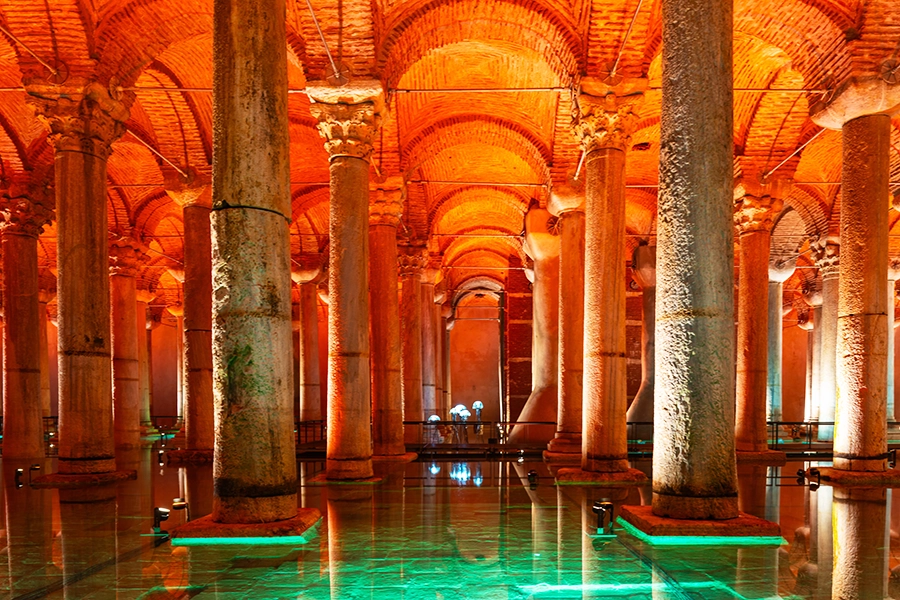
Inside the Basilica Cistern, visitors walk through an atmospheric underground chamber filled with 336 marble columns, shallow water, reflections and historic architectural details. The main highlights include the Medusa head column bases, the Column of Tears and the long symmetrical rows supporting the vaulted ceiling.
Inside the Basilica Cistern at a Glance
The interior combines Byzantine water engineering, reused Roman architectural material and a modern visitor walkway through the historic underground reservoir.
The marble columns support the brick vaults covering the underground chamber.
The tall columns create the palace-like appearance associated with the Turkish name Yerebatan Sarayı.
The columns are arranged in long, regularly spaced rows across the cistern.
Most visitors can follow the route and see the main features within this time.
What Is the Visitor Route Like?
Visitors follow a defined walkway through the cistern. The route provides views across the columns and leads toward the best-known architectural and sculptural features.
-
01
Enter the Underground Chamber
After ticket validation and entry controls, visitors descend into the dark, cooler interior of the historic reservoir.
-
02
Walk Between the Columns
The visitor platform continues through the long rows of marble columns reflected in the shallow water.
-
03
See the Main Highlights
The route passes the Column of Tears, Medusa head column bases and other distinctive architectural details.
-
04
Continue toward the Exit
After viewing the main features, visitors follow the marked route toward the final section and exit area.
The 336 Columns inside the Basilica Cistern
The columns are the dominant architectural feature of the interior. Their different materials, shapes and capitals indicate that many were reused from earlier structures.
Marble Columns
The large number of columns supports the vaulted brick ceiling and divides the underground chamber into symmetrical rows.
Regular Arrangement
Twelve rows containing twenty-eight columns each create the repeated visual rhythm seen throughout the cistern.
Column Height
Most columns rise approximately nine metres from their bases toward the vaulted ceiling above.
Reused Architectural Material
Corinthian, plain and differently shaped capitals reflect the reuse of stone from more than one earlier source.
The Column of Tears
The Column of Tears is recognized by its carved patterns and continuously damp appearance. Its surface differs from the smoother columns found throughout much of the cistern.
A popular legend connects its tear-like appearance with workers who died during construction. This interpretation is part of the site’s later storytelling rather than established historical evidence.
Water, Reflections and Atmospheric Lighting
The combination of shallow water and controlled lighting creates the visual atmosphere for which the Basilica Cistern is known today.
Shallow Water
A limited amount of water remains visible beneath the walkways and around the column bases, recalling the structure’s original purpose.
Column Reflections
The water reflects the vertical columns and lights, making the underground chamber appear deeper and more symmetrical.
Modern Lighting
Carefully positioned lighting highlights the columns, vaults, sculptures and reflective surfaces without removing the dark underground atmosphere.
The Medusa Head Column Bases
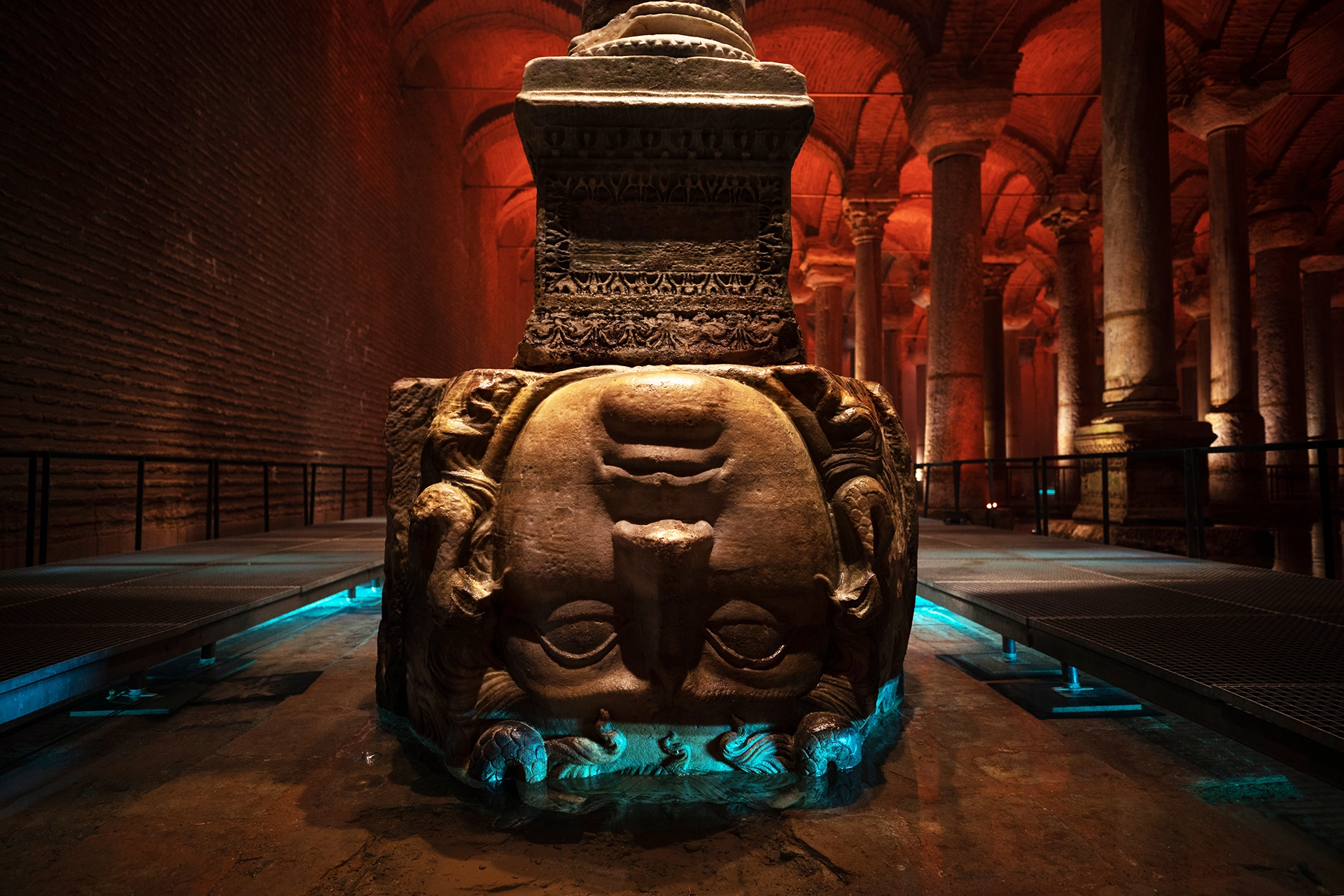
Two carved Medusa head blocks support columns in one of the most visited parts of the cistern. One is positioned horizontally and the other upside down.
They are generally regarded as reused Roman sculptures incorporated into the Byzantine structure. Their original location and the reason for their unusual orientation remain uncertain.
Discover the Medusa Heads and Their LegendsArchitectural Details to Notice
Beyond the main attractions, smaller differences in the columns, capitals and masonry reveal how the cistern was constructed and repaired over time.
Brick Vaults
Brick arches and vaults transfer the weight of the structure above onto the rows of supporting columns.
Different Decorative Styles
Some columns have Corinthian-style capitals, while others use simpler or less decorative forms.
Waterproof Brick Walls
The walls and floor were coated with thick waterproof mortar designed to retain a large volume of water.
Columns from Earlier Buildings
Differences in stone type, proportions and decoration indicate that architectural elements came from multiple earlier structures.
The Modern Visitor Experience
The Basilica Cistern no longer operates as a city water reservoir. Conservation work, visitor platforms and lighting now allow the historic structure to be explored as a cultural attraction.
Artistic displays and temporary installations may also appear inside the cistern. These elements can change according to the current cultural programme and should not be confused with the original Byzantine structure.
Six Things to Look for Inside
These features provide a simple checklist for exploring the main visitor route.
Long Rows of Columns
Pause at wider viewpoints to see the repeated rows extending through the underground chamber.
Different Column Capitals
Compare decorative Corinthian-style capitals with the simpler forms used on other columns.
The Column of Tears
Look for the distinctive carved surface and damp appearance that separate it from surrounding columns.
The Two Medusa Heads
Compare the sideways sculpture with the second block positioned completely upside down.
Water Reflections
Notice how the columns and lights are repeated in the shallow water below the visitor platform.
Brick Vaulted Ceiling
Look upward to see the brick arches and vaults supported by the marble columns.
Photography Tips inside the Basilica Cistern
The interior is visually impressive but challenging to photograph because of the low light, reflections and moving visitors.
- Keep your phone or camera steady when photographing in low light.
- Use smartphone night mode carefully to reduce blurred images.
- Avoid standing in the middle of the visitor route while composing photographs.
- Follow any current restrictions on tripods, flash or professional equipment.
Continue Exploring the Basilica Cistern
Learn more about the structure’s history, famous sculptures and practical visitor information.
History of the Basilica Cistern
Discover why the underground reservoir was constructed and how it was used during the Byzantine and Ottoman periods.
Explore the HistoryMedusa Heads
Learn why one Medusa sculpture is sideways, why the other is upside down and which explanations are legends.
Discover the Medusa HeadsVisitor Tips
Check advice on visit duration, mobile tickets, photography, headphones and the best time to arrive.
Read Visitor TipsExplore inside the Basilica Cistern
Walk among 336 marble columns, see the Medusa heads and experience the water reflections and atmospheric lighting of Istanbul’s historic underground cistern.
Frequently Asked Questions About the Basilica Cistern Interior
What is inside the Basilica Cistern?
The interior contains 336 marble columns, shallow water, brick vaults, a visitor walkway, two Medusa head column bases and the feature known as the Column of Tears.
How many columns are inside the Basilica Cistern?
There are 336 columns arranged in 12 rows, with 28 columns in each row.
How tall are the Basilica Cistern columns?
Most of the marble columns are approximately nine metres high.
Is there still water inside the Basilica Cistern?
Yes. Shallow water remains visible beneath parts of the visitor route, creating reflections around the columns and lights.
What is the Column of Tears?
The Column of Tears is a distinctive column with carved patterns and a damp surface. Legends connect its appearance with workers who died during construction, but this story is not confirmed historical evidence.
How long does it take to explore the interior?
Most visitors spend approximately 30–45 minutes inside. Visitors using an audio guide or taking more photographs may prefer to allow up to one hour.
Is the Basilica Cistern interior dark?
Yes. The underground chamber uses subdued atmospheric lighting. Visitors should allow their eyes time to adjust and move carefully through darker areas.